Build a Mind
That Can Think.
At MathWhiz Beads, we use the abacus to help children develop focus, concentration, visualisation, logical thinking, problem-solving and confidence — skills that extend far beyond mathematics.

In a world full of distractions, we help build what matters the most.
Focus. Confidence. The ability to think.
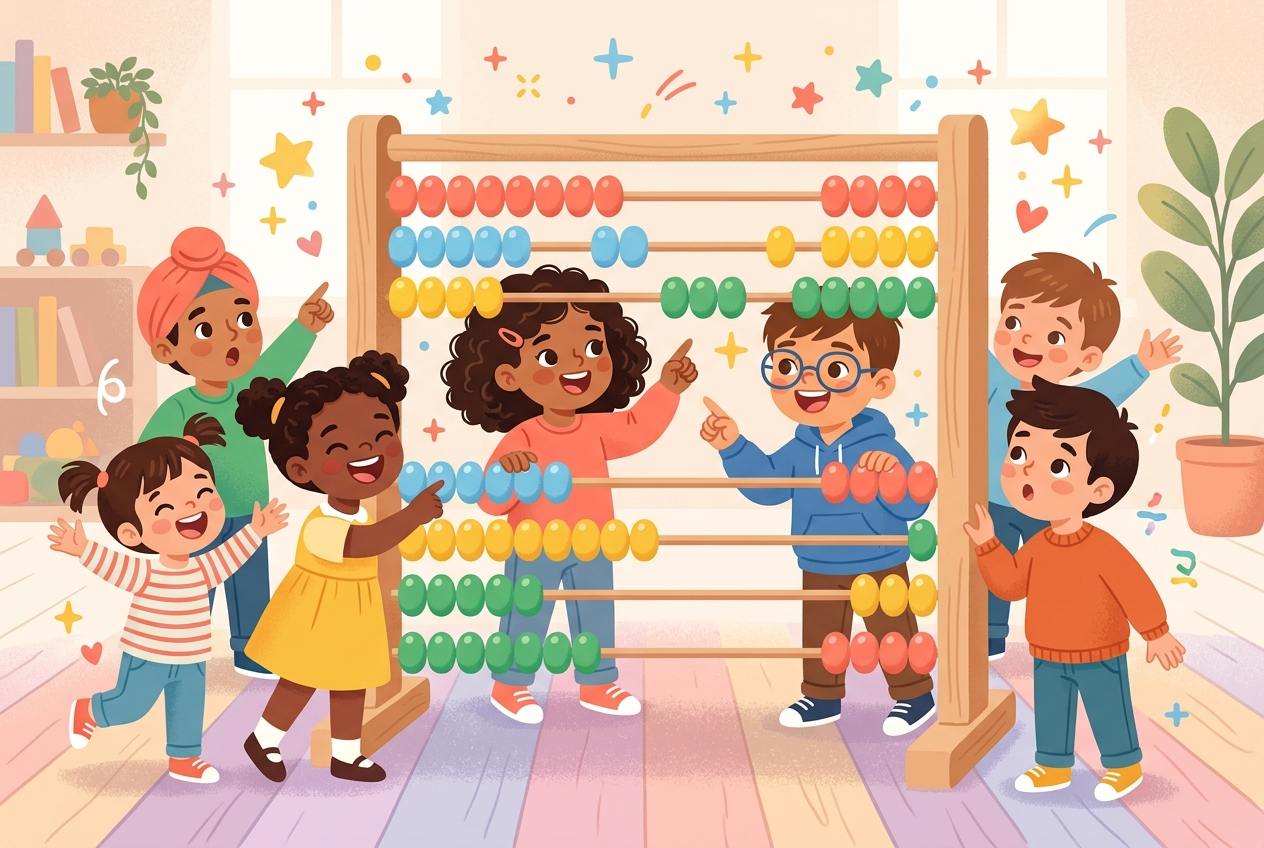
The Abacus Is Just the Beginning.
An abacus may look like a simple tool for learning numbers. But when a child learns to use it, something much bigger happens.
They learn to focus, visualise, remember, think logically, solve problems.
And most importantly, they learn to believe in themselves.
At MathWhiz Beads, we believe mathematics is not just about finding the right answer — it's about developing the mind that can find it.
We're not just teaching children to calculate. We're teaching them to think.
The abacus gives children a unique way to see, understand and work with numbers. With regular practice, children gradually move from physically moving beads to visualising them in their minds.
Stronger Mental Skills
Abacus practice engages visualisation, memory, concentration and mental processing. Children learn to hold information in their minds and work with it.
Better Focus & Concentration
Abacus practice requires attention and consistency. Children learn to stay focused on a task, manage distractions and keep working until they reach a solution.
Logical Thinking
Not simply memorising answers — children learn patterns, sequences and methods that encourage a structured, logical approach to problems.
Problem-Solving Skills
Children learn to break problems down, understand them and find solutions — habits useful in mathematics, academics and everyday life.
Confidence Through Achievement
Every problem solved is a small achievement. As challenges are overcome, one important belief takes root: “I can figure this out.”
Speed with Accuracy
Regular practice makes children quicker at processing numbers while staying accurate — and far more confident under pressure.
The numbers are the starting point. The skills go much further.
One skill strengthens another — better focus supports better learning, better understanding builds confidence, and every challenge creates another opportunity to grow.
Helps children stay engaged with what they are doing.
Helps them create and work with mental images.
Helps them retain and use information.
Helps them understand patterns and relationships.
Helps them approach challenges with a clear mind.
Gives them the courage to take on something difficult.
Teaches the value of regular practice and persistence.
Every child's journey begins with something they can see and touch.
Learn
Children begin by understanding numbers and basic concepts using the physical abacus.
Practise
Regular practice builds familiarity, accuracy, concentration and confidence.
Visualise
Gradually, children begin to imagine the abacus and beads in their minds.
Think
They learn to process numbers mentally instead of depending on the physical abacus.
Solve
They grow comfortable solving increasingly challenging problems independently.
Believe
Every new achievement builds confidence in their own ability.
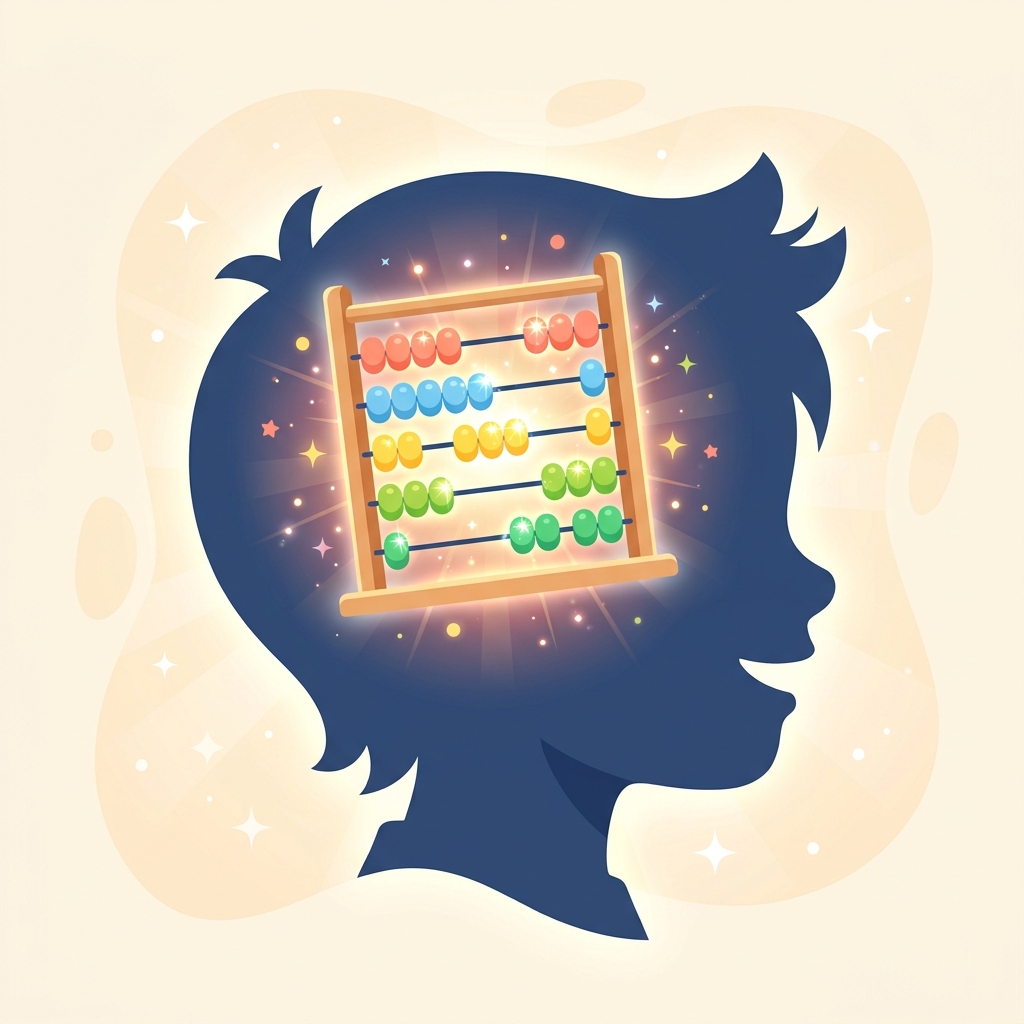
From moving beads with their hands to moving them in their minds.
That's the MathWhiz journey.
The real value of learning isn't limited to one subject.
The ability to focus, think clearly, solve problems and stay confident helps children in every corner of life.
School & Academics
Concentration, memory and logical thinking support children across subjects and academic challenges.
Competitive Exams
Speed, accuracy, concentration and problem-solving are invaluable when children face time-bound tests.
Everyday Life
Children constantly encounter situations that require them to think, decide, solve and adapt.
The Future
The world doesn't just need people who can remember information — it needs people who can think, learn, adapt and solve problems.
They Start With Beads.
They Grow With the Skills.
The goal isn't for children to depend on the abacus forever — it's to help them develop the ability to eventually do without it.
The beads may disappear. The skills don't.
A modern learning experience built around timeless skills.
We combine the proven concept of abacus learning with an engaging, structured practice experience that keeps children motivated.
Structured Learning
A progressive journey that lets children build their skills step by step.
Engaging Practice
Interactive exercises and challenges that make regular practice genuinely enjoyable.
Track Progress
Children see their improvement, celebrate milestones and know how far they've come.
Build Confidence
Every completed challenge and achievement gives children another reason to believe in themselves.
Learn Through Practice
Consistent practice turns small improvements into lasting skills.
You don't need your child to be the smartest in the room.
You want them to be able to face the room with confidence.
- To concentrate when things get difficult.
- To think when there isn't an obvious answer.
- To keep trying when they make mistakes.
- And to believe: “I can figure this out.”
That's the kind of confidence we want to build.
Because marks matter. But the ability to learn, think and solve matters for life.
To help children become confident thinkers.
We want every child to discover that learning is not about being naturally brilliant. It's about practising, improving, overcoming challenges and believing that they can get better.
The abacus gives them a place to begin. We want to help them build skills that stay with them for life.
Give Your Child More Than Another Activity.
Give them an opportunity to focus, think, practise, achieve and grow. Give them the confidence to face challenges and say:
“I can do this.”